How to Evaluate a Semaglutide Peptide Supplier
Learn how to evaluate a semaglutide peptide supplier through regulatory compliance, quality systems, batch traceability, testing records, and transparent business practices.
Peptide research overviews, laboratory protocols, and analytical methodologies.
 CNN
 Reuters
 Associated Press
 CNBC
 NBC News
 Bloomberg
 NPR
 MarketWatch
 The Independent
 BBC Science FocusCNNReutersAssociated PressCNBCNBC NewsBloombergNPRMarketWatchThe IndependentBBC Science Focus
Coverage concerns the cited peptide medications and studies; logos belong to their owners and imply no PEPMAKE endorsement.
 Peptide Science
Learn how to evaluate a semaglutide peptide supplier through regulatory compliance, quality systems, batch traceability, testing records, and transparent business practices.
 Peptide Science
Learn how to evaluate semaglutide peptide purity through HPLC testing, molecular identity, COA documentation, impurity analysis, and batch consistency.
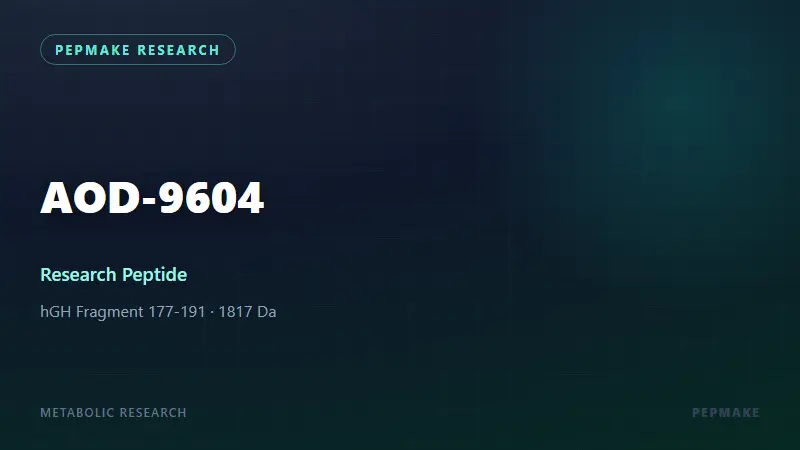 Peptide Science
AOD-9604 research peptide is a synthetic C-terminal fragment of human growth hormone studied in metabolic research models for antilipogenic and lipolytic activity.
 Peptide Science
BPC-157 and TB-500 are popular research peptides that differ in structure and research profile. This plain-language comparison explains the key differences.
 Peptide Science
CJC-1295 is a long-acting GHRH analog studied in growth hormone research. This guide covers the DAC vs no-DAC forms, mechanism, and how to buy research-grade CJC-1295.
 Buyer's Guides
Custom peptide synthesis turns an amino acid sequence into a purified, tested peptide. This guide covers synthesis, purity options and what to ask a supplier.
 Peptide Science
DSIP research peptide guide: delta sleep-inducing peptide nonapeptide chemistry, sleep research findings, and how to source lab-grade DSIP for studies.
 Longevity & Cellular Research
Epitalon is a synthetic tetrapeptide (Ala-Glu-Asp-Gly) studied in telomere and pineal research. This profile covers its structure and buying checklist.
 Skin & Dermal Research
GHK-Cu is a naturally occurring copper-binding tripeptide studied in skin and tissue research for decades. Here is what the science shows, in plain language.